

Bešenovo Monastery




First mentions and early history
The found of the Bešenovo Monastery, dedicated to the Holy Archangel Michael, is traditionally attributed to the Holy King Dragutin. Mata Kosovac wrote that “an ancient crucifix from 1297” is kept in this church in Fruška gora, a crucifix made in such a skillful way that some distinguished travelers “coveted it for a museum in Vienna”. It was inscribed on the crucifix that it was given to Bešenovo by a certain Laza and Atanasko, although it was later discovered that they actually “bought” it only in 1659. The connection of this building to the Nemanjić dynasty was also seen by Kosovac in the choice of its heavenly patron, the Holy Archangel Michael, who was the patron saint of this Serbian holy dynasty. Furthermore, the year 1467 was inscribed on the temple itself, which is generally interpreted today as a record of the time in which it was painted.
Again, the first reliable mentions of Bešenovo can be found in the Ottoman defters from 1545-48. Its name is found later as well, in the menology of deacon Petar from 1569, in the Ottoman census of 1578, as well as in the document which announced the definition of the monastic constitution from 1581 and 1582, when the writing of “The Code” was completed during the administration of Hegumen Silvestar of Bešenovo. In the 17th century, witnesses of this monastic family’s life are Hegumens Silvestar and Timofej, who collected alms in Russia during 1628 and 1637. Almost two decades later, Hegumen Hristofor renovated the refectory and several cells, while in 1694, during the Great Turkish War, his heirs successfully fought for an Ottoman firman that would guarantee the safety of Bešenovo.
Old temple and the dormitory
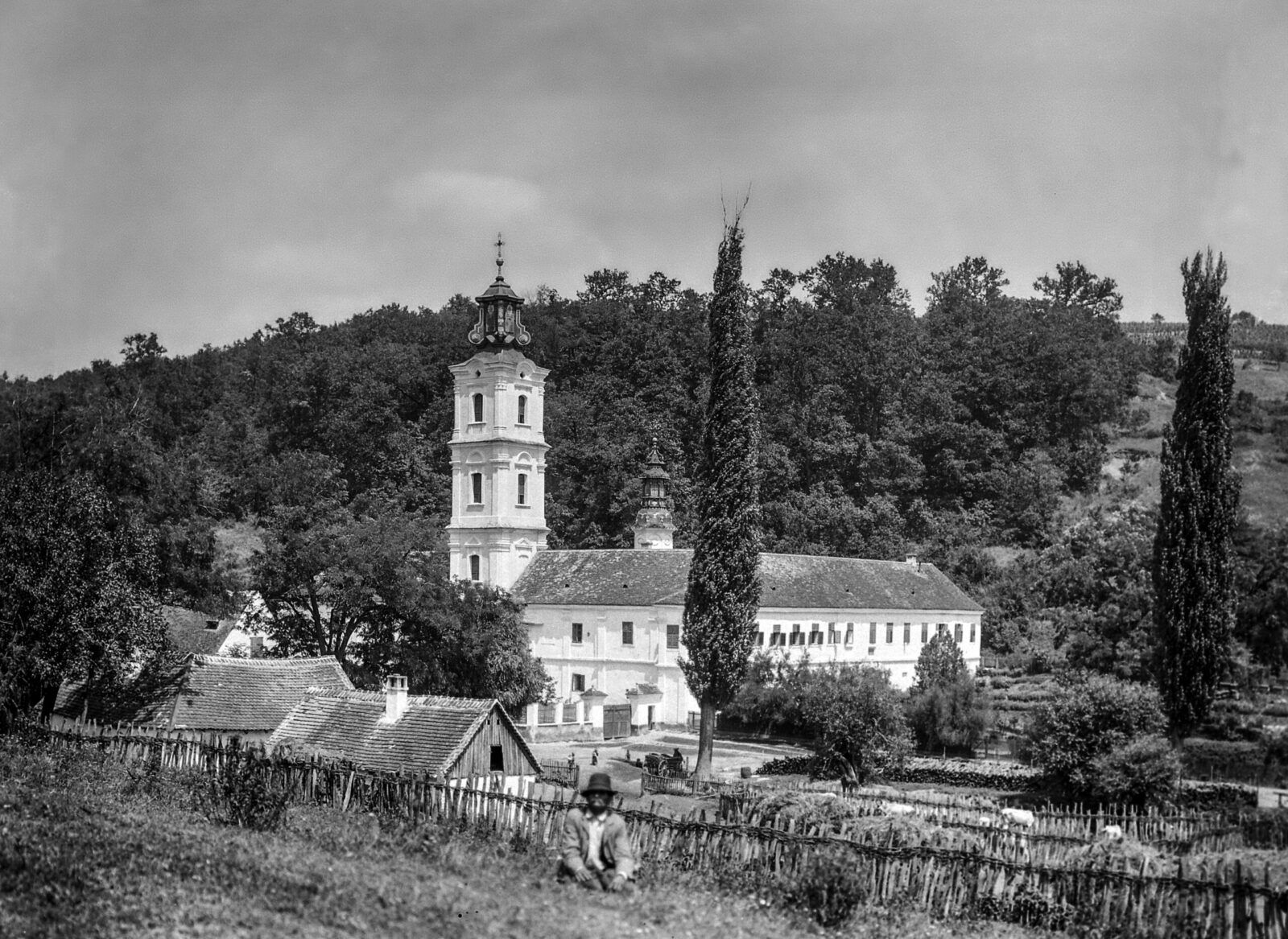
The monastery reached its heyday after the third decade of the 18th century, when, “through the efforts of the brotherhood and pious Christians”, lodgings of permanent construction were built – its detailed representation is given in the “The Description” from 1753. According to the information of the visitation committee, thirteen monks gathered around the ancient, frescoed place of worship, built of brick and covered with oak shingles, with a small dome, an old iconostasis and floors made of white and red marble. This monastic family was quite wealthy, which can be concluded by the description of the church door, made of walnut and “decorated with mother-of-pearl”. By 1771, a four-story baroque bell tower was added to it, which housed the chapel of Saint Cyricus and Julitta. The relics of these martyrs were stored in a reliquary, made in 1773 and displayed in the bell chapel, under the icon which depicts them and which was donated by Dimitrije Bačević in 1766. The iconostasis of the chapel was executed by Kuzman Kolarić in 1783, with Trifun Jovanović from Novi Sad and hieromonk Isaija as ktetors.
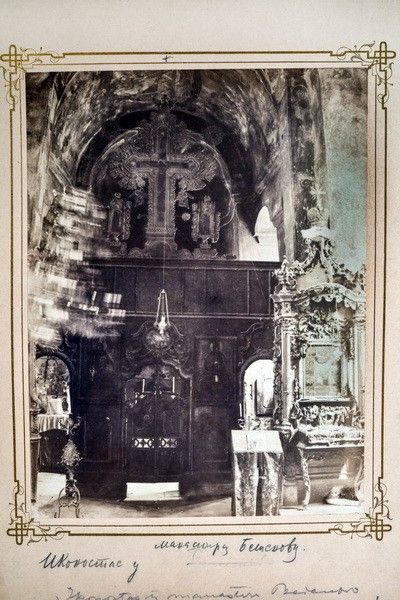
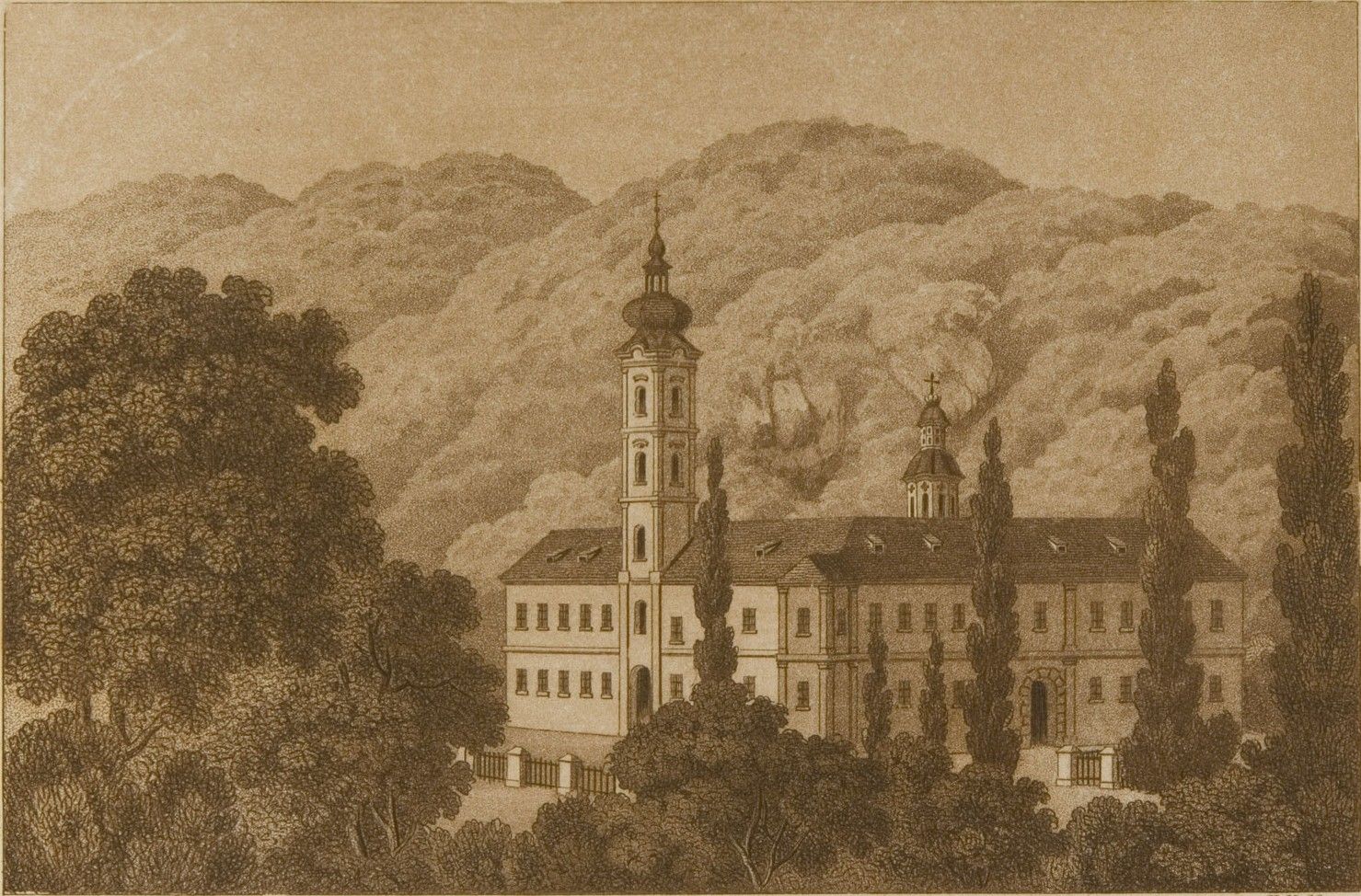
From the old iconostasis painted by an unknown artist, four representations of Saint John, Saint Michael the Archangel, Christ on the throne and the Virgin with Christ have been preserved. After they were restored in 1770 by the painter Vasiliy Romanovich, two rows of icons with a central Deisis composition and a monumental Crucifix on top, covered the altar area of the monastery church until the first decade of the 20th century. From 1906 to 1909, by order of the church administration, new icons were painted by Stevan Aleksić. The former temple is a burial place of Aleksandar Rašković, a relative of the Patriarch Arsenije IV and a former vice-duke and colonel of the “Rascian Militia”, who, together with his father Atanasije, migrated from Serbia to the Habsburg Monarchy in 1737. There are descriptions from the middle of the 18th century of an old northern wattle and daub dormitory which was only partially walled with stone. The monastery complex was finally shaped by the beginning of the 19th century, when the heights of the floors and roofs were evened and a high wall was built on the eastern side. Its appearance can be reconstructed based on a drawing by Hugo Hetzendorff from 1828 and a lithograph by Michael Troch from between 1837 and in 1841.
Treasury of the Monastery
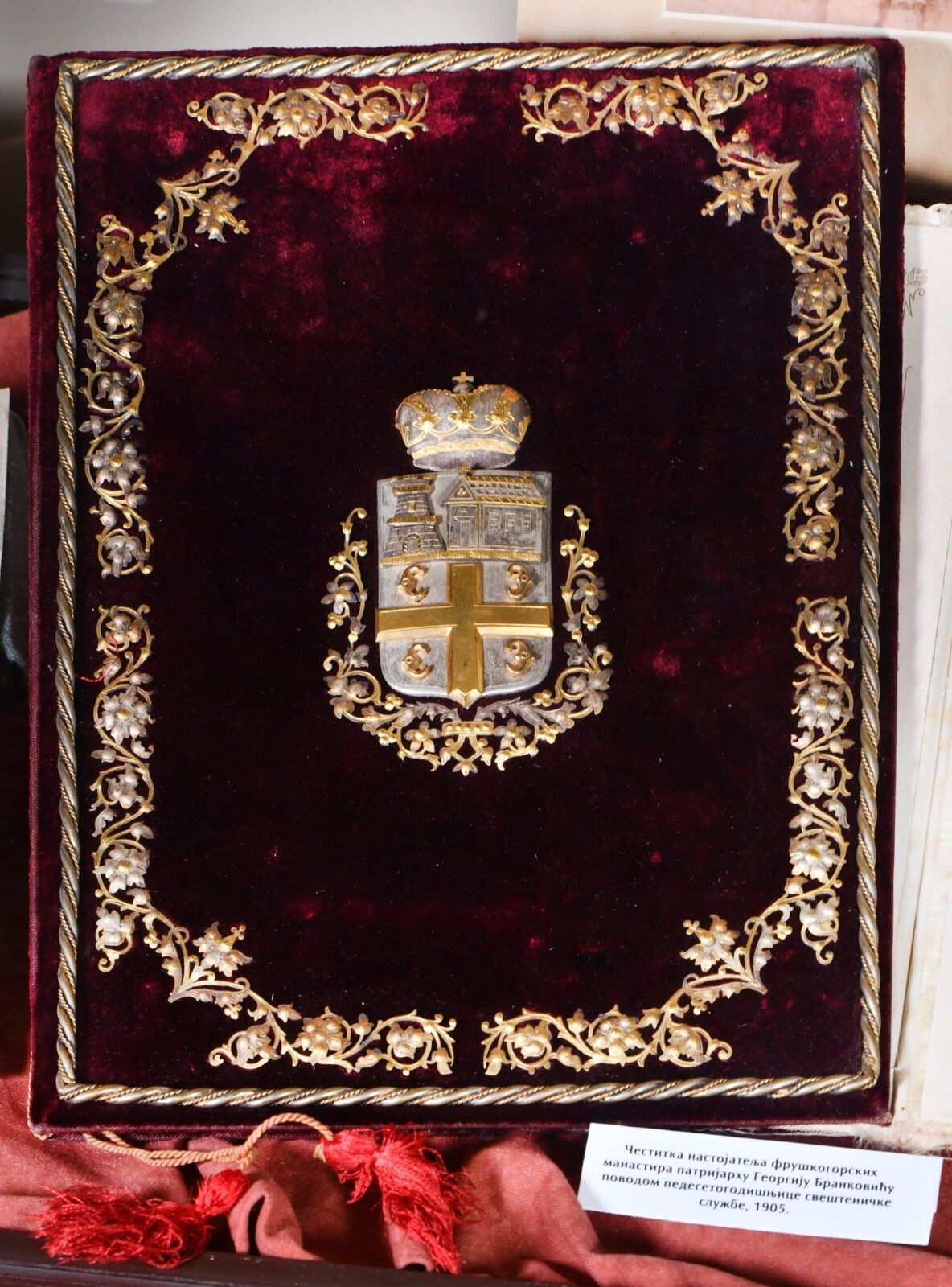
Until the outbreak of the Second World War, several precious antiquities were stored in Bešenovo, such as the “beautiful belt of Patriarch Arsenije IV from 1740”, the alabaster baptismal font from the 14th century, a silver cup of Luka the silversmith from 1652 and a handwritten, lavishly bound “Gospel” from 1557. The monastery housed a valuable library, with fifteen handwritten books, the oldest of which were the “Gospel” from 1592, “The Code” from 1581, menology for May 1712 and the “Octoich” from 1656.
Suffering and renewal
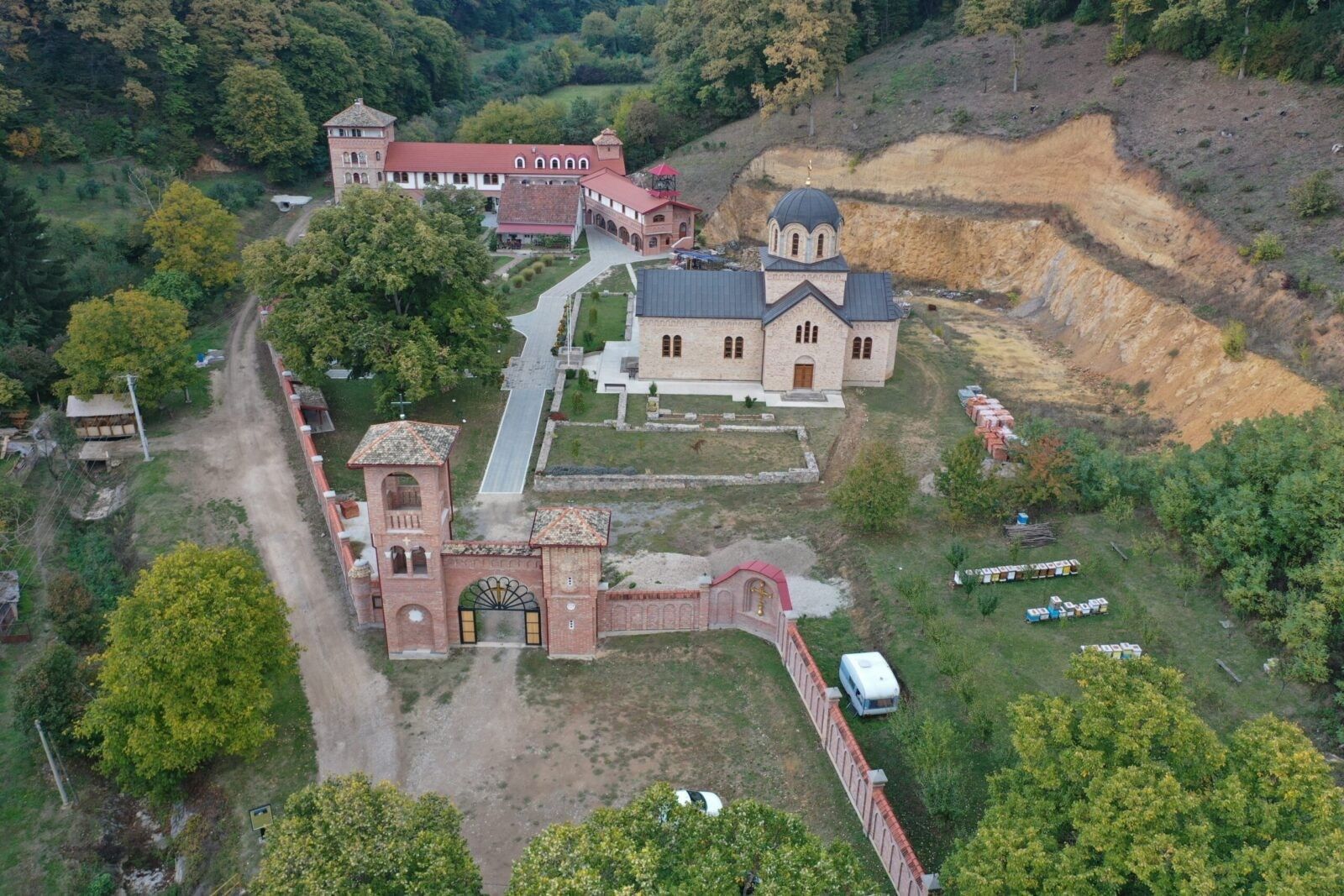
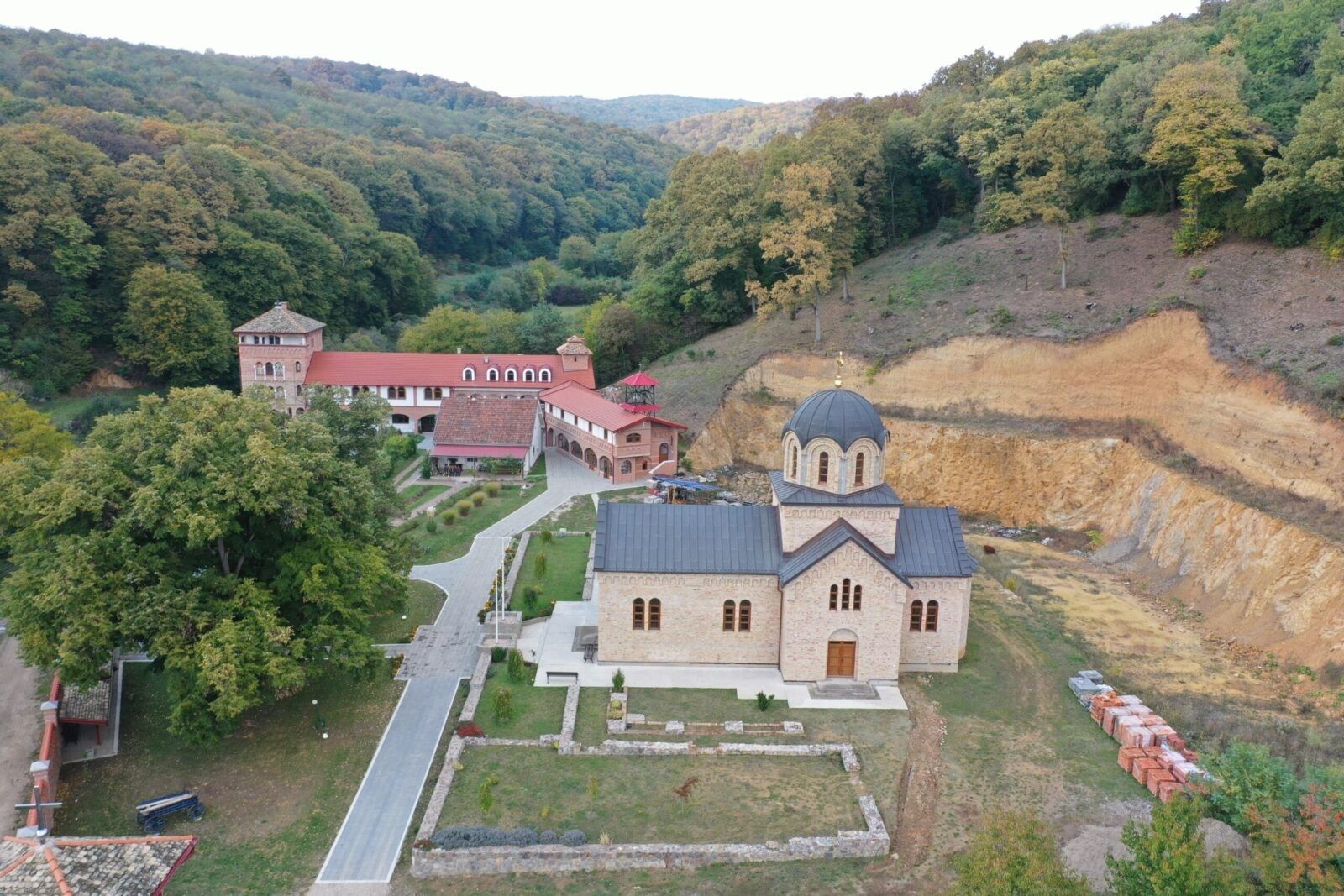
During the Second World War, Bešenovo was looted and demolished, burned and finally razed to the ground in May 1944. Preserved parts of iconostasis by Aleksić were found in the parish church of Bešenovo in 1946 and were transferred to the Museum of Church Art in Sremska Mitrovica. In the following decades, the inhabitants of the surrounding towns dragged building materials from its sad remains. The heap of rubble, overgrown with thick weeds, was cleared for the first time only in 2004, and four years earlier a wooden chapel with a small bell tower was built. On the low, wooden belfry stood the bell of the former monastery school, which was returned from the collective agricultural holding.
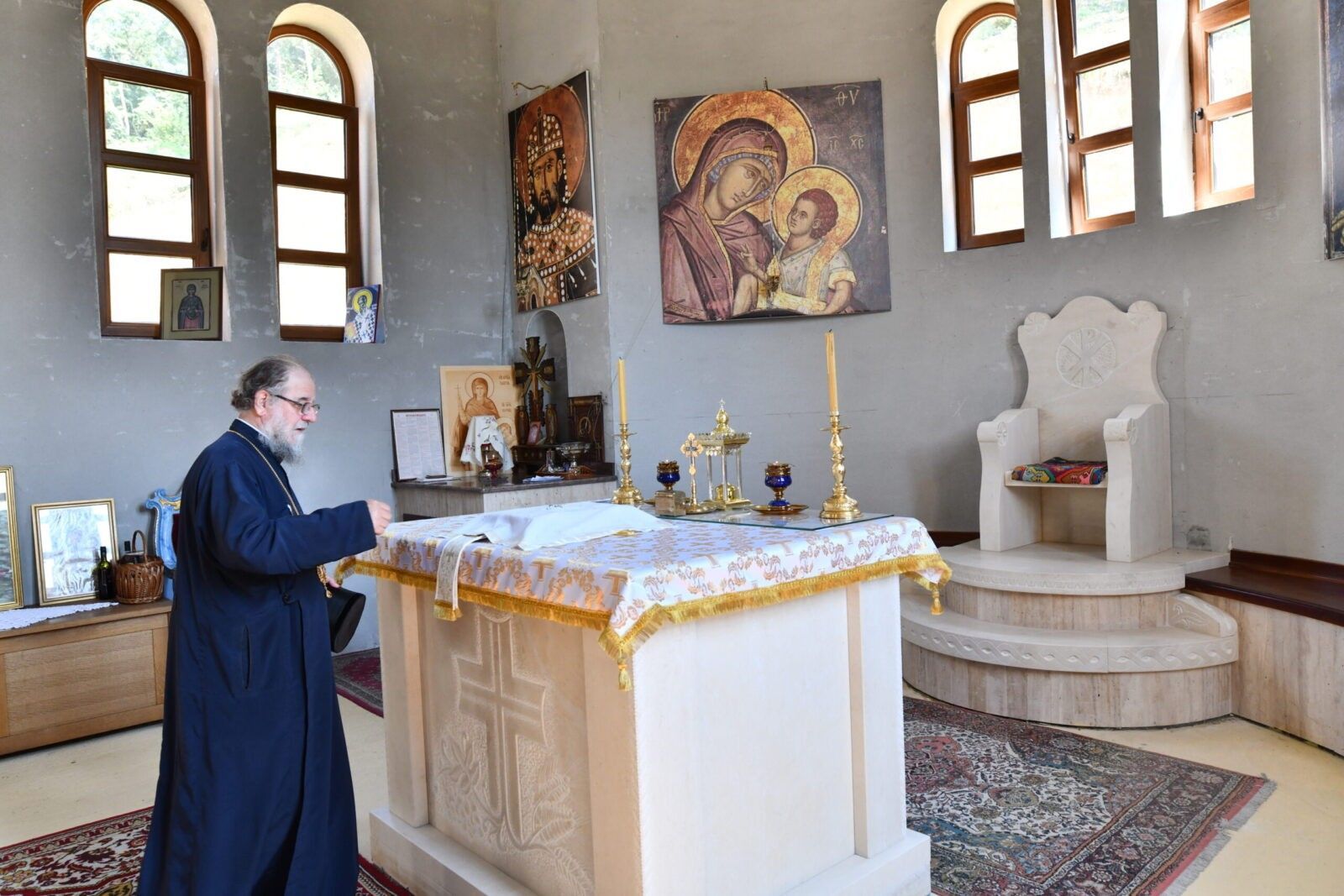
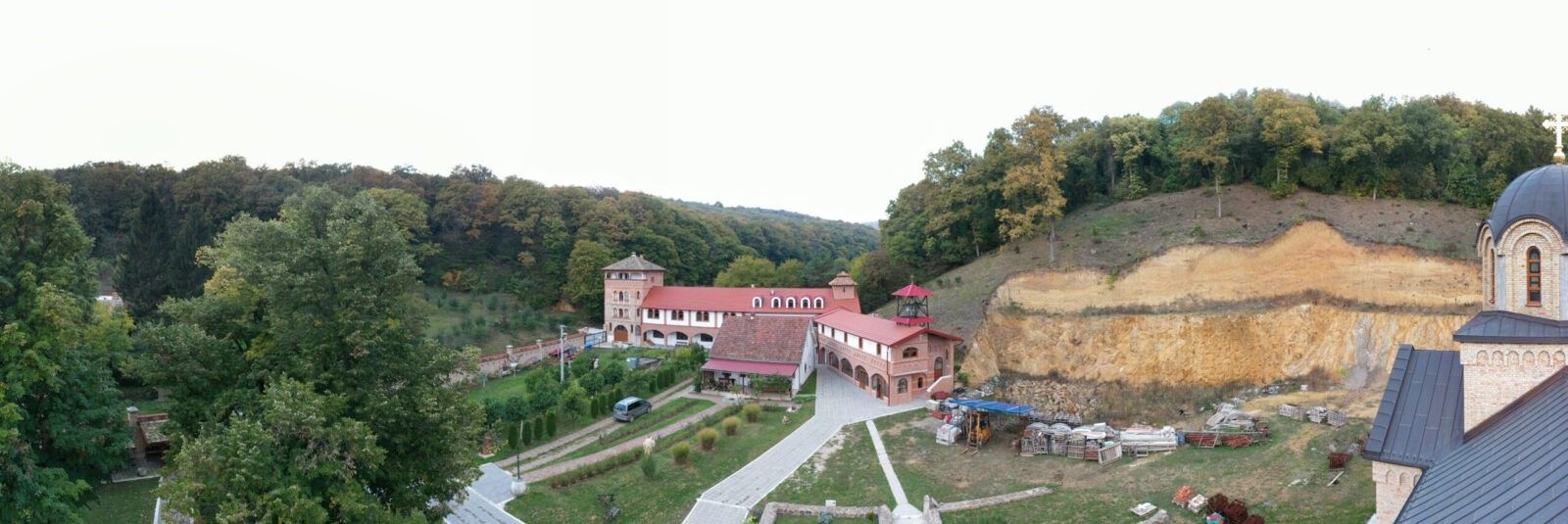
The renovation of Bešenovo is now in full swing. To this day, the temple, the dormitory, auxiliary building, garage, workshop, food cellar and a new bell tower have been built. The bells from the bell tower were bought by the hieromonk Lavrentije in 1926 and 1927. They were brought here from Dalj and from the parish churches in Mandjelos and Bešenovo. During the construction of the new temple, the tomb of Aleksandar Rašković was also restored. Furthermore, the conservation of the old Roman tombs from the end of the 1st century was done, which will be available to pilgrims and visitors. A silver signet ring from the 14th century was also found during the archaeological research conducted in the area of the former monastery complex.