

Petkovica Monastery

First mentions and early history
According to folklore, Petkovica was founded by Jelena, the widow of Saint Stefan Štiljanović, who wanted to spend the last years of her life there as a quiet nun. The inscription, partially preserved on the western wall of the temple, reads that this building was painted thanks to Hegumen Akakije in 1588, at the same time as the construction of the oldest monastery refectory. It is mentioned in the Turkish tax registries in 1566–1569, 1578 and 1595. Apart from these relatively meager data, there is no information about Petkovica until the end of the 17th century, when Sinan-bey issued an order to demolish it, together with Kuveždin, in order to obtain building materials for building his residence in Mitrovica. After the Turkish magnate had already demolished the refectory and part of the dormitory, he was dissuaded from this unfortunate intention by the Metropolitan of Belgrade-Srem, Paisija, on the condition that in the future the received an annual tribute of one hundred groschen.
Temple and the dormitory
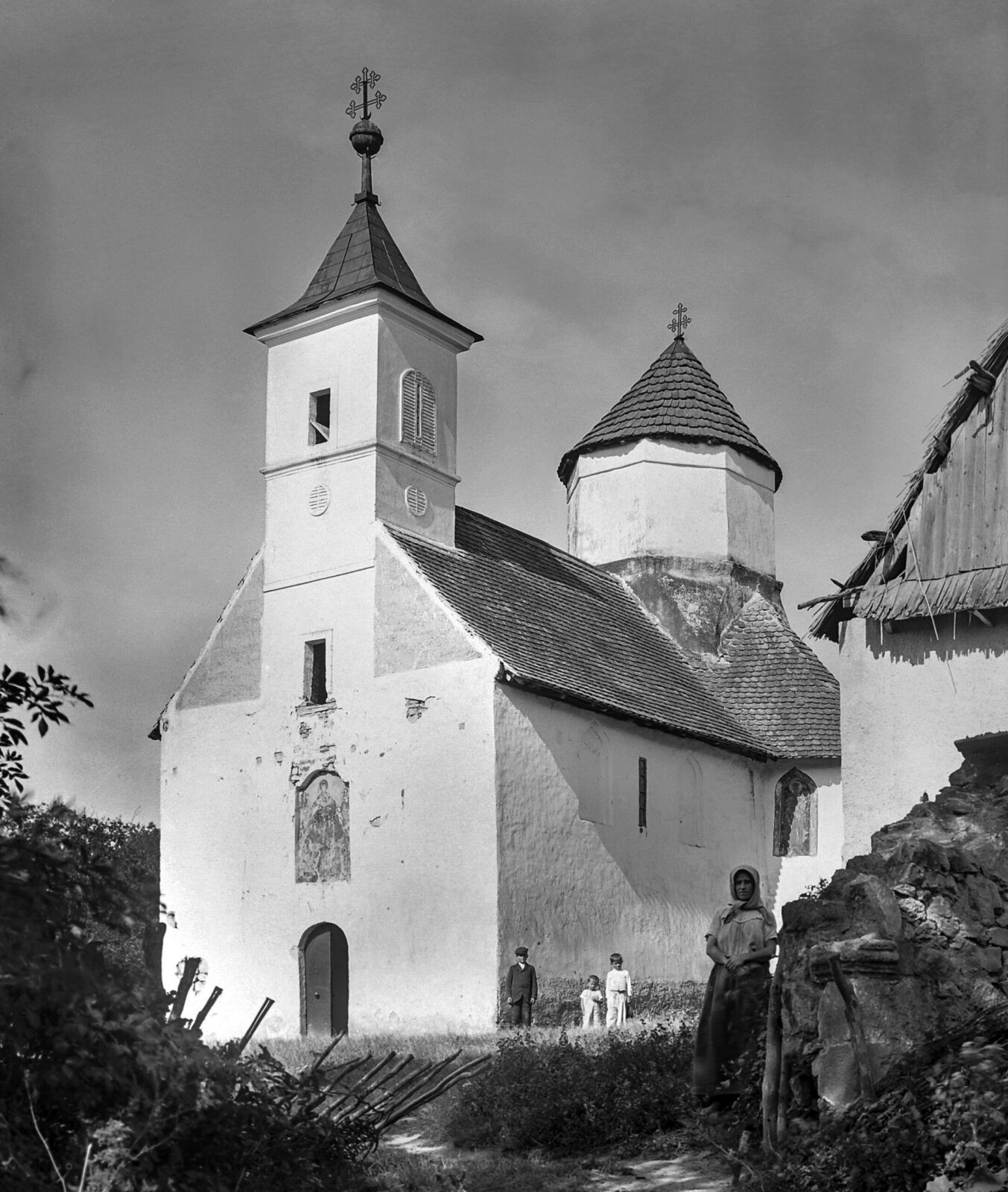
It seems that, by the time of the arrival of Patriarch Arsenije III, the monastery had fallen into disrepair to a greater extent, as can be concluded from the letter he sent to the Hegumen of Kuveždin, Jevsevije, instructing him to initiate its restoration. This undertaking was successfully completed by the beginning of the 18th century, when the Metropolitan of Fruška Gora, Stefan (Metohijac), consecrated the Holy Table. It is also recorded that in 1734, in addition to Hegumen Prokopije, a seven-member brotherhood lived in the rebuilt Petkovica, with a temple covered with shingles and whitewashed walls. A year after compiling this list, Milenko Vučković from the village of Šuljma erected a harmonious iconostasis partition with a magnificent woodcut depicting the “Crucifixion”.
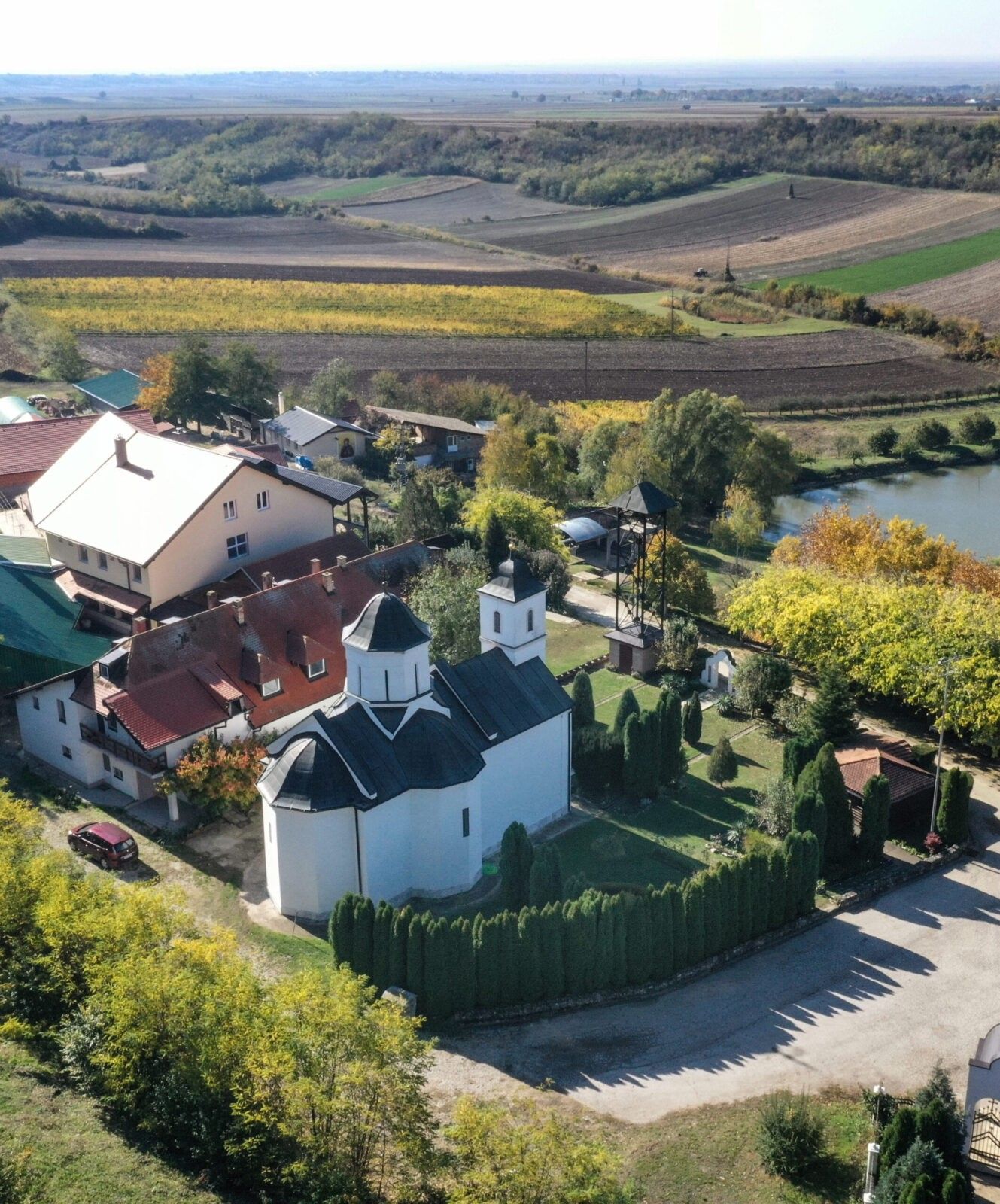
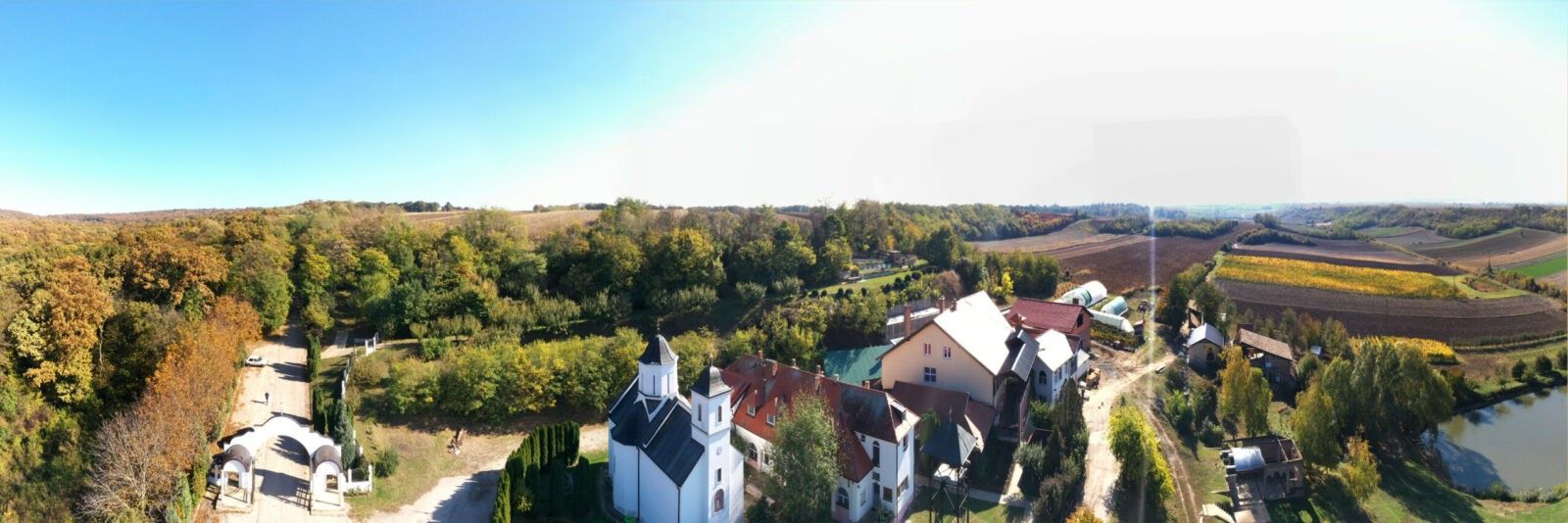
In 1741, Petkovica was united with the nearby monastery Šišatovac, by the decision of Patriarch Arsenije IV. A detailed description of the harmonious, triconchic monastery temple with an octagonal dome, four windows, an apse and semicircular analogions, brick floors and a wooden bell tower, a lodge made of wood and wicker, covered with reeds, and a wooden belfry, is given in the “Description” from 1753. At that time, Petkovica had a large number of icons and a bishop’s table and was decorated with “old paint”. The same source testifies that the famous monastery fountain was built before the visitation in 1753. Considering the fact that it represented the metochion of the Šišatovac monastic community, in the future only a small number of ascetics stayed here. In the second half of the 19th century, the monastery was again in a rather poor condition, probably due to its status as an outpost. Although it was restored in 1884, thanks to the efforts of Šišatovac Hegumen Amfilohije (Jeremić), only two decades later Hegumen Sergije (Popić) was again forced to collect funds for Petkovica, this time for the construction of a new dormitory.
Sufferings and renewals
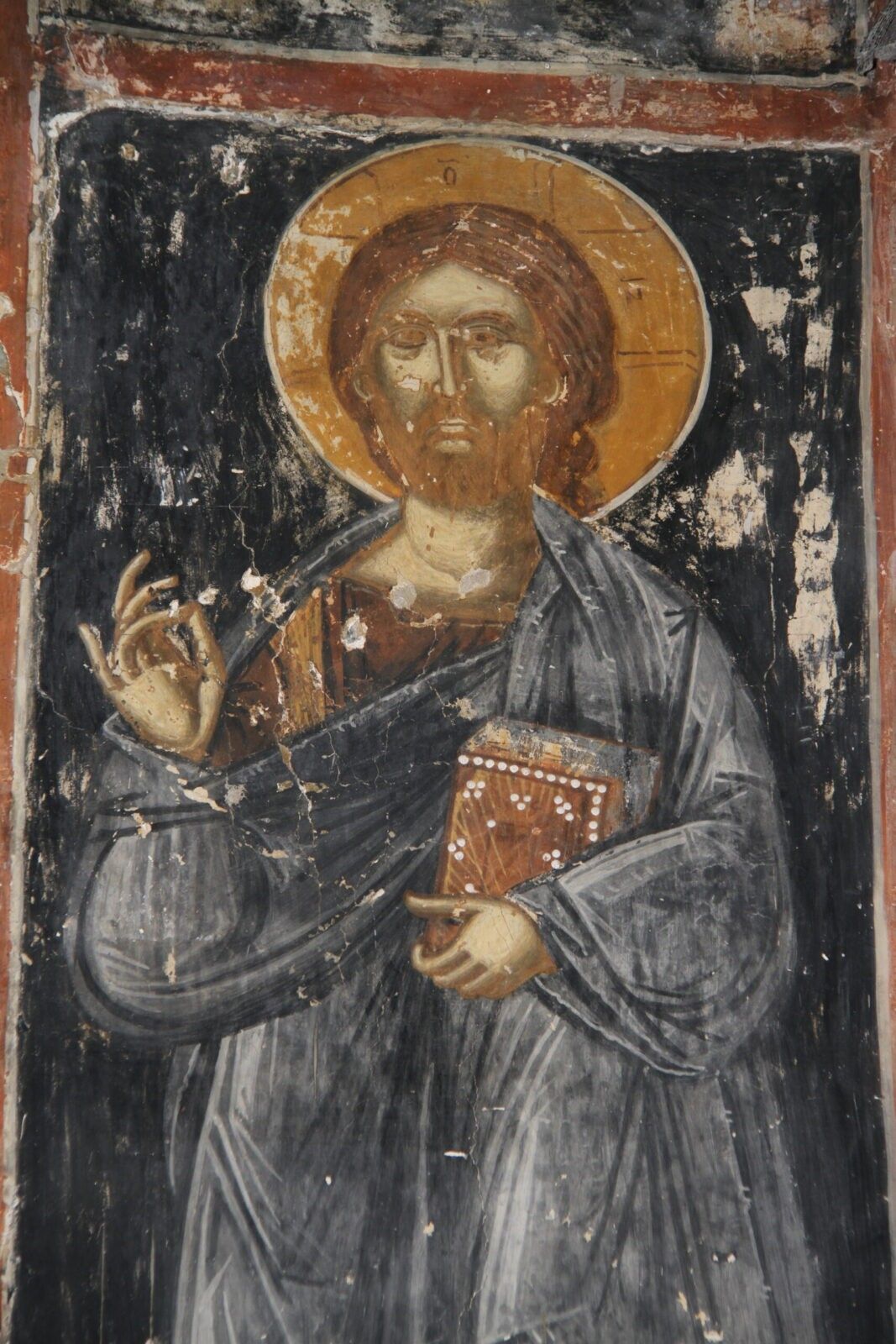
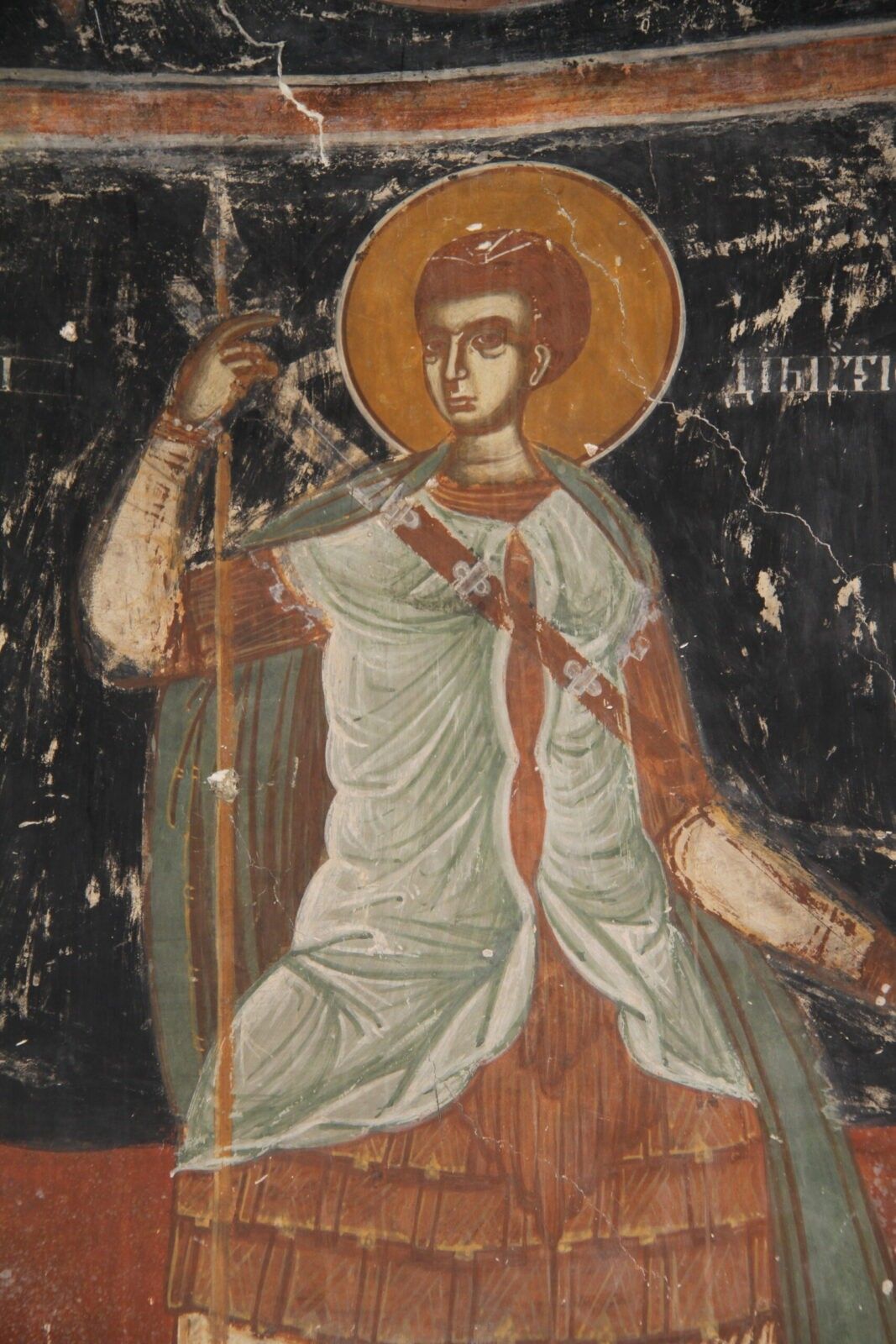
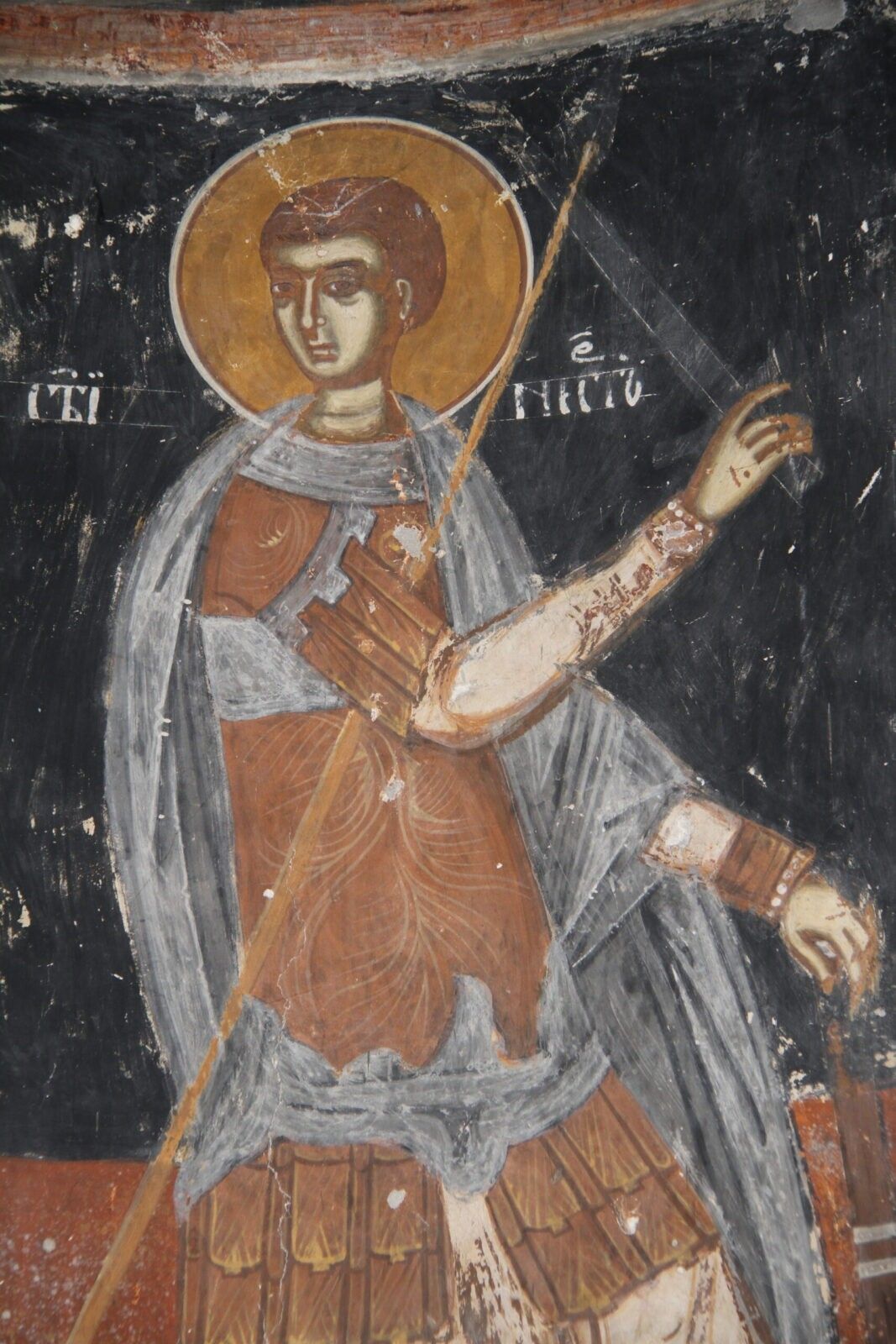
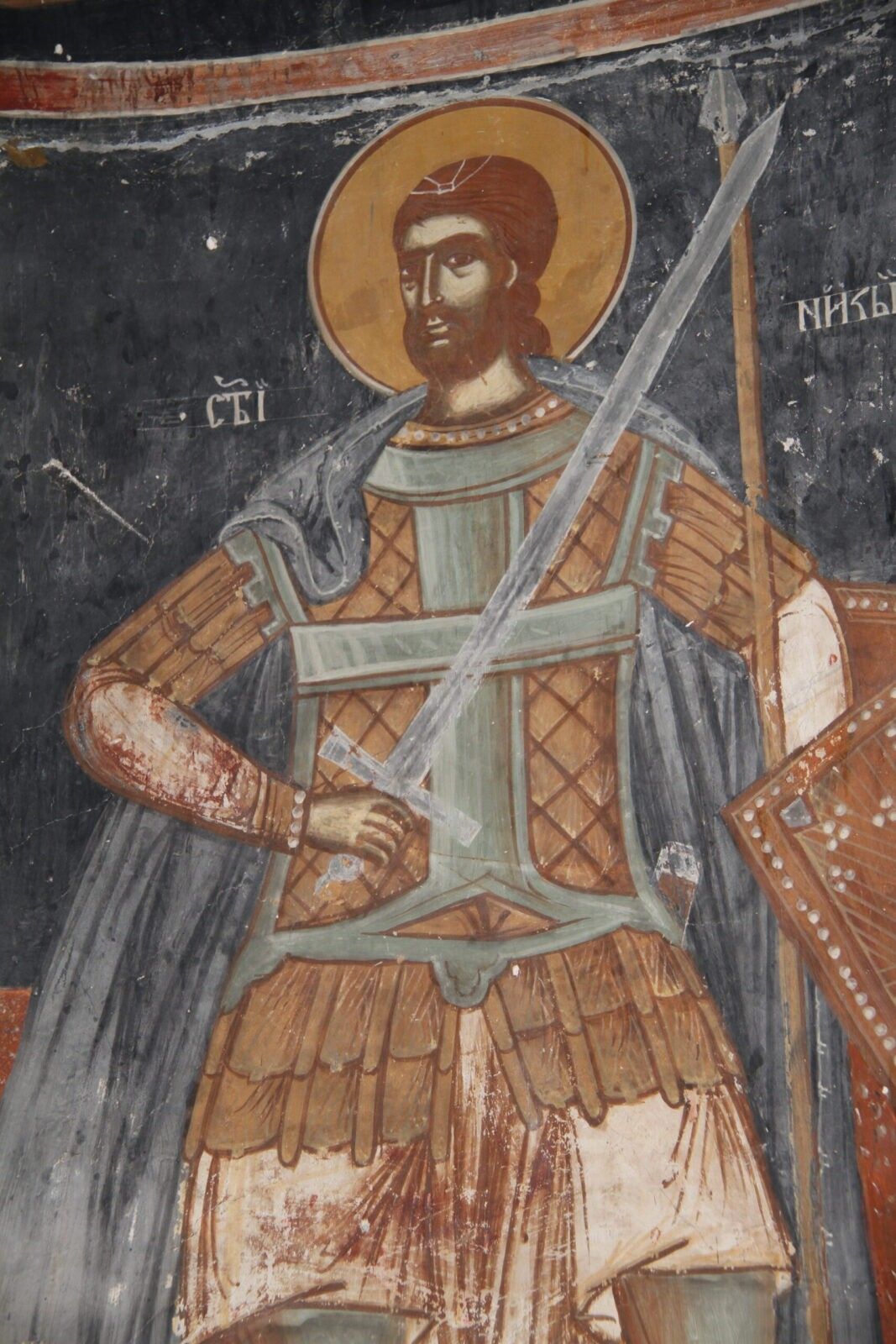
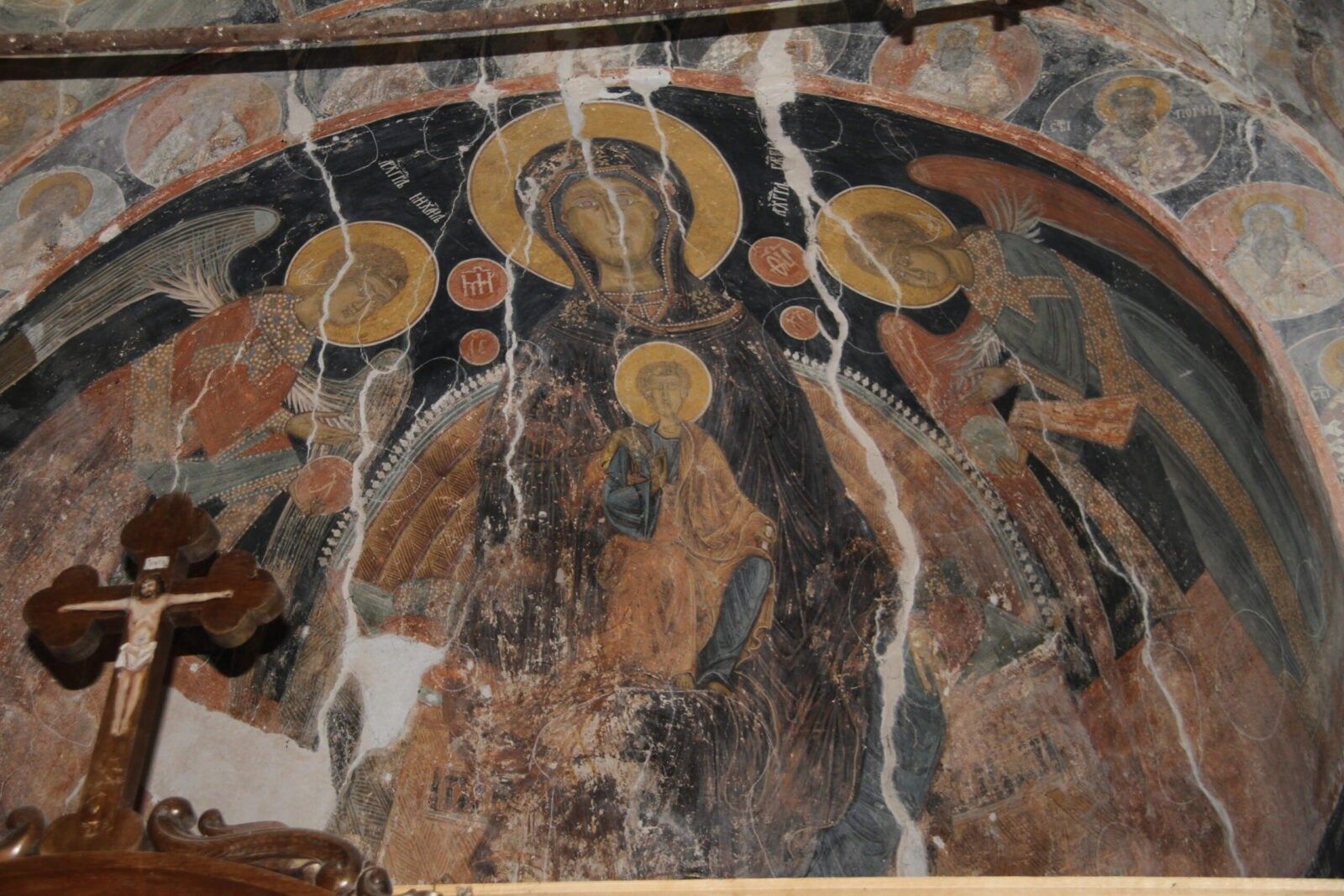
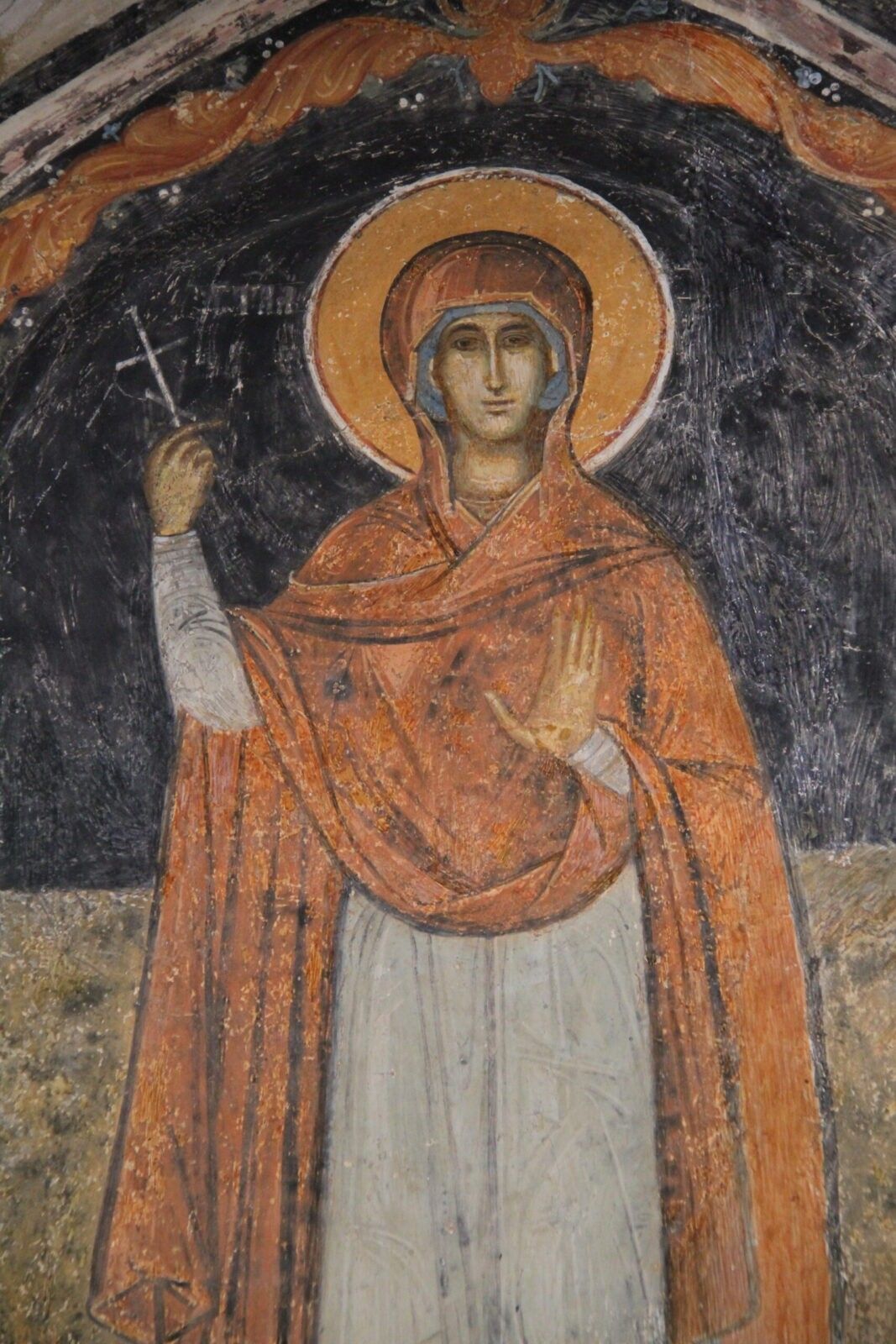
This monastery was seriously damaged in the First World War, so its buildings were renovated in 1927. Between 1941 and 1945, Petkovica was not destroyed, but all the more valuable items found in the temple and the dormitory, including a plaque with an engraved text about its early history, were looted and taken to Zagreb. Unfortunately, the iconostasis was almost completely destroyed, except for the aforementioned “Crucifixion” on top, which was later transferred to the Art Gallery in Sremska Mitrovica. Until 2001, it was a deserted place, officially named as an outpost of the Šišatovac monastery. The necessary conservation work was carried out by the competent institutions from 1952 to 1954 and on that occasion the lime was removed from the interior walls of the temple, revealing one of the oldest Fruška Gora paintings. However, due to the damage to the roof, in the following period, atmospheric conditions caused irreparable damage to the valuable, old frescoes, so a new conservation was carried out after 1991. The artistic repertoire in this church is fully adapted to the relevant canons of the Orthodox Church.
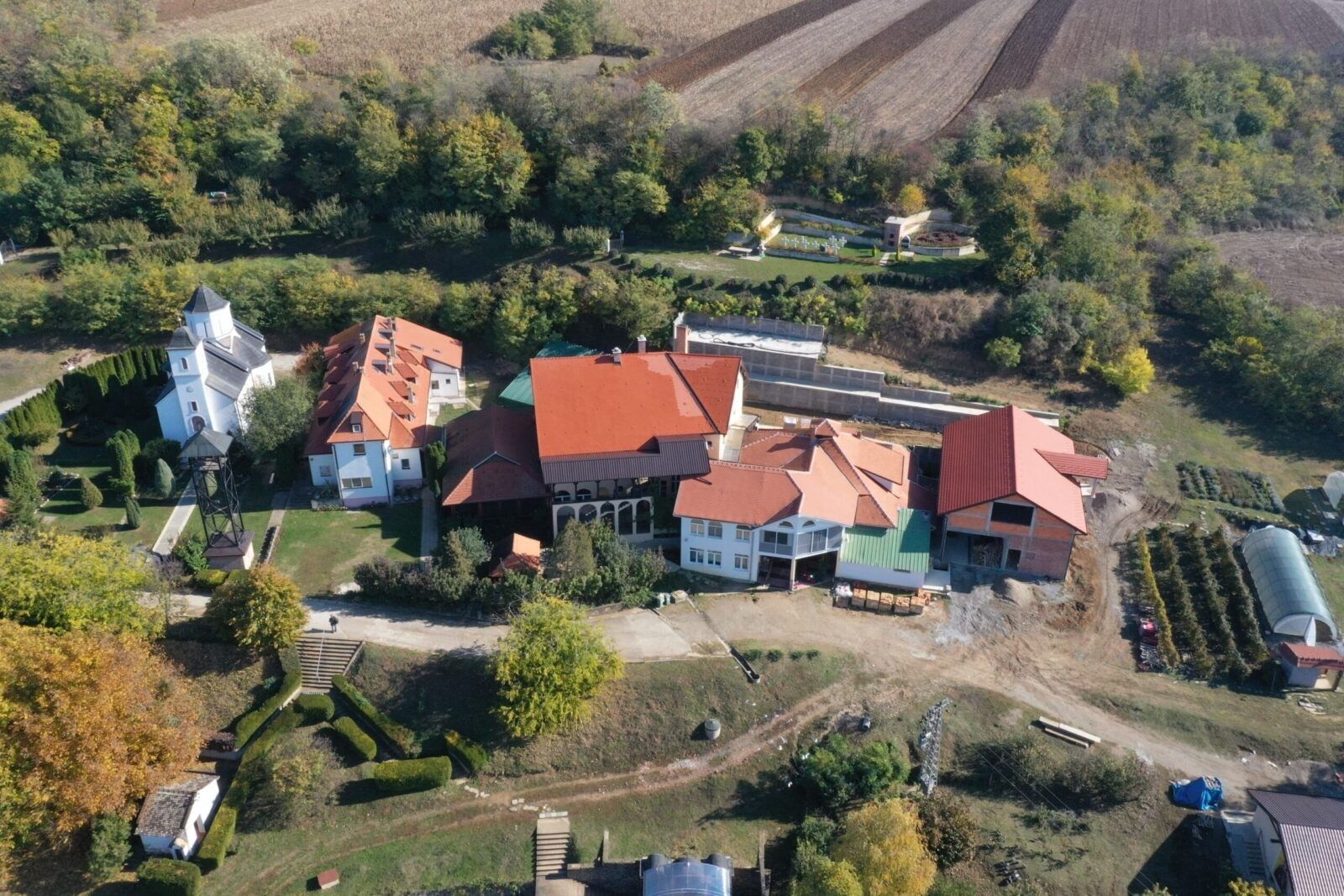
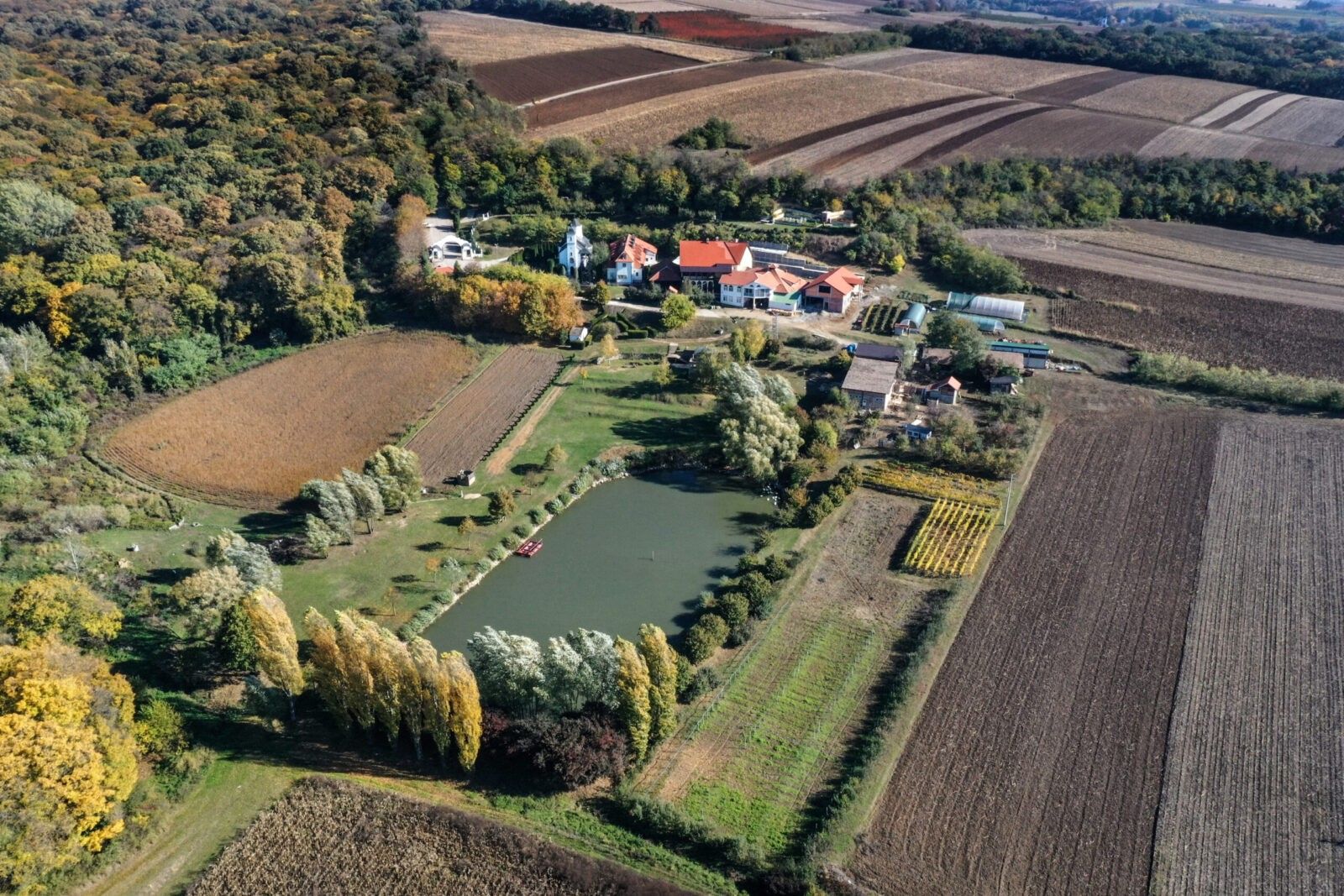
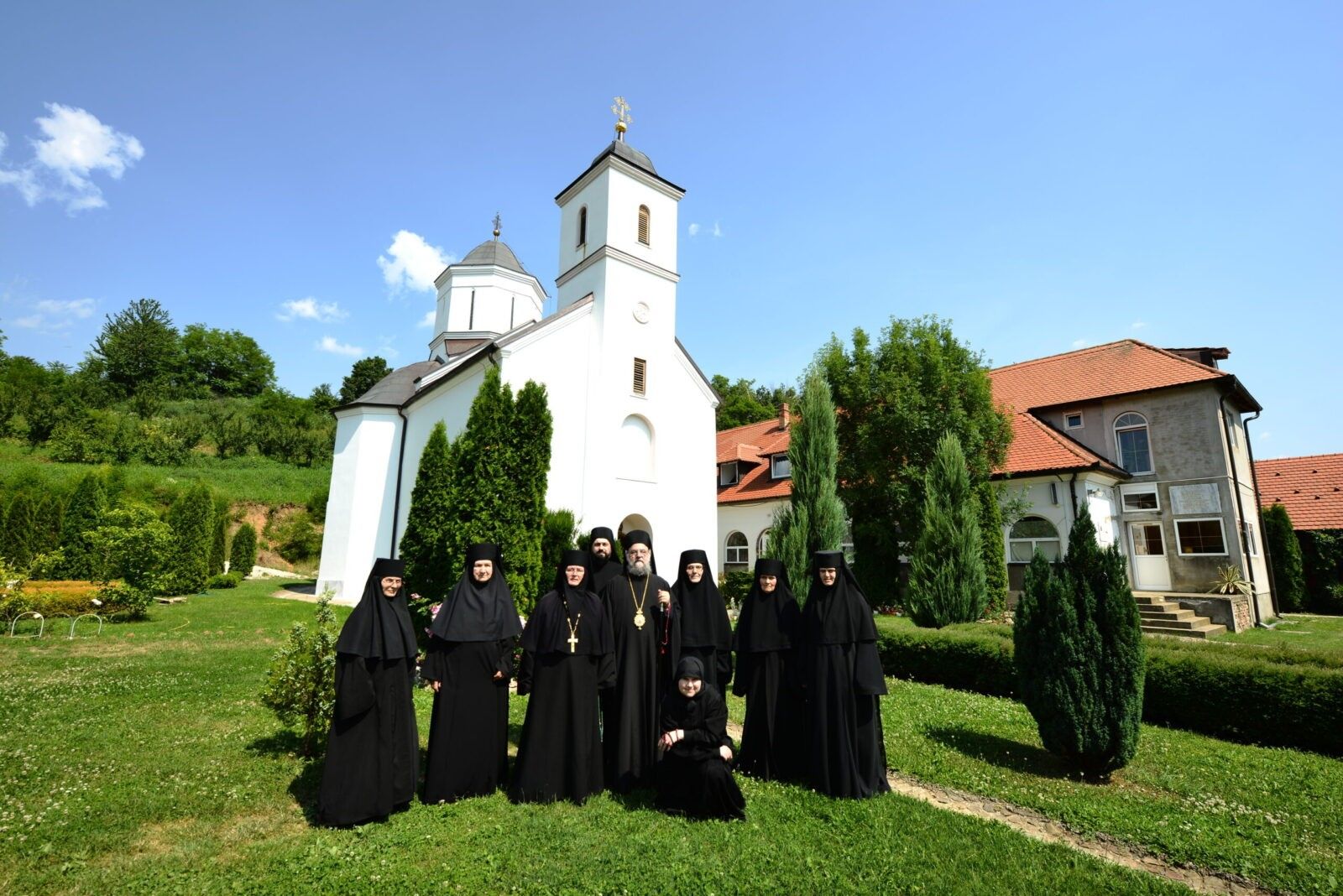
The renovation of the Petkovica monastery, which is still ongoing, began in 2001, when, with the blessing of the Bishop of Srem, Mr. Vasilije, the Nun Antonina (Simić) settled in the dormitory from 1989, without electricity, running water, windows and doors, and was soon joined by her mother Melanija (Milosavljević). With the help of the gathered sisterhood, the asphalt parking lot and the road leading to the monastery were arranged, electricity and water were introduced, and a suitable gate, refectory and kitchen were built, as well as an economic building, with premises for the production of wine and brandy, a workshop and a chardak, in 2003. A pleasant, spacious terrace was also built for visitors and pilgrims, while a souvenir shop and a chapel for lighting candles were placed in the churchyard. Under the sunny hill on which the monastery is located, a rather large pond was excavated.
Since 2002, a particle of the relics of Saint Petka has been stored In Petkovica, in a reliquary made of wax in the shape of a hand. Within the monastery complex there is also a spring, which is believed to be miraculous, as well as to help barren women especially and those with poor eyesight. As part of the re-established farm, there is now a winery, a “distillery”, a laboratory and a workshop for making embroidery and souvenirs. The sisterhood owns a barn, a garage and a tractor.