

Staro Hopovo Monastery

First mentions and early history
Judging by the life of Mother Angelina and folk tradition, the monastery dedicated to Saint Nicholas, under the name Staro Hopovo, was founded between 1486 and 1502 by the despot Đorđe Branković, later Bishop Maksim. This opinion was unreservedly accepted by the historians of the 19th century, as well as by the later elders of Novo Hopovo, Archimandrites Irinej (Radić) and Sevastijan (Ilić). The monastery is mentioned in 1545–1548, 1566–1569 and 1578 in reliable Turkish defters. Dušan K. Petrović also mentions the “Hopovo Menology”, written in 1541, during the time of Hegumen Pavle. According to the same source, the relics of Saint Theodore Tiron were stored here in 1555 and 1563. The old wooden church of St. Nicholas collapsed in an earthquake, so on its foundations, from 1752 to 1756, Archimandrite Zaharija (Milivojević) built a new church of stone and brick, dedicated to his patron saint, St. Panteleimon. The existence of this monastic community was recorded in the “Description” from 1753, as an outpost of Novo Hopovo.
Temple and the dormitory
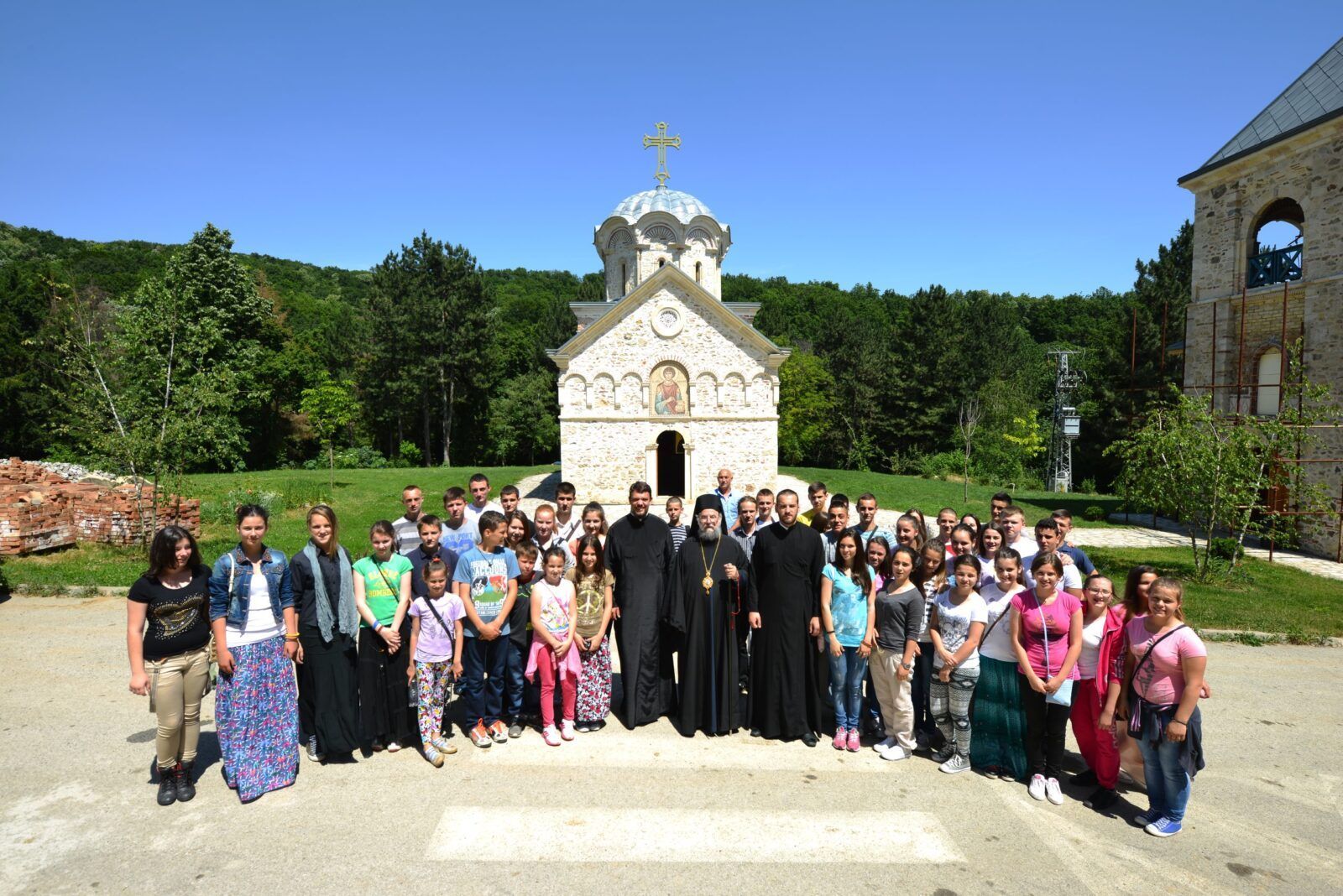
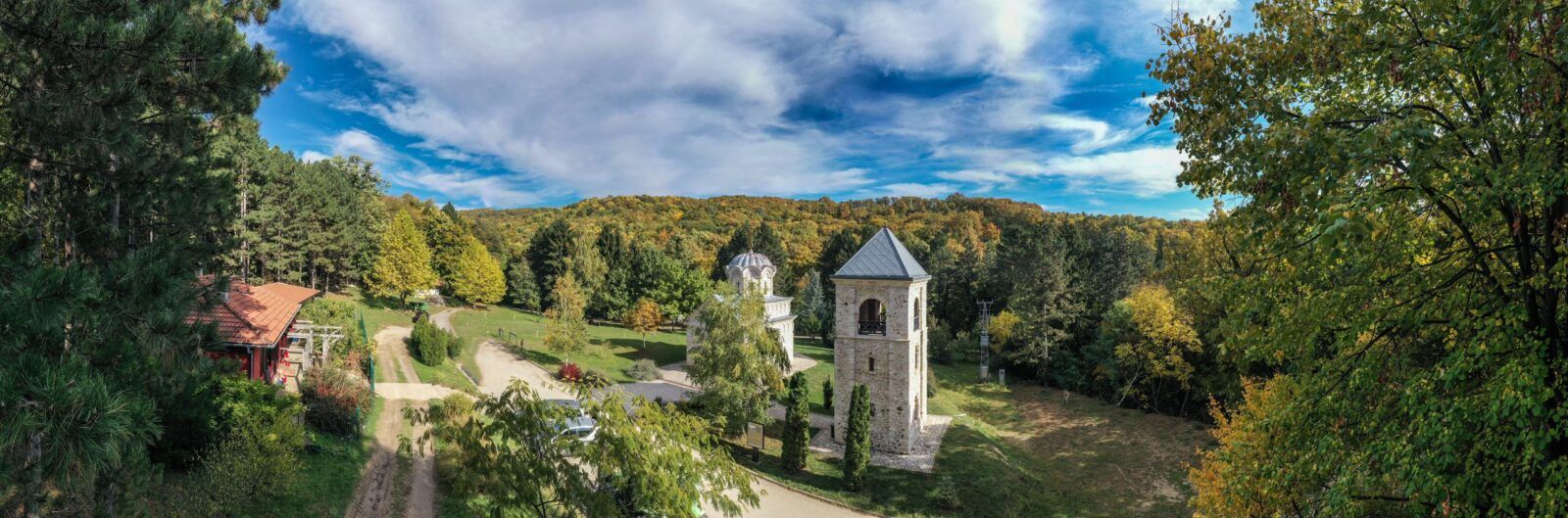
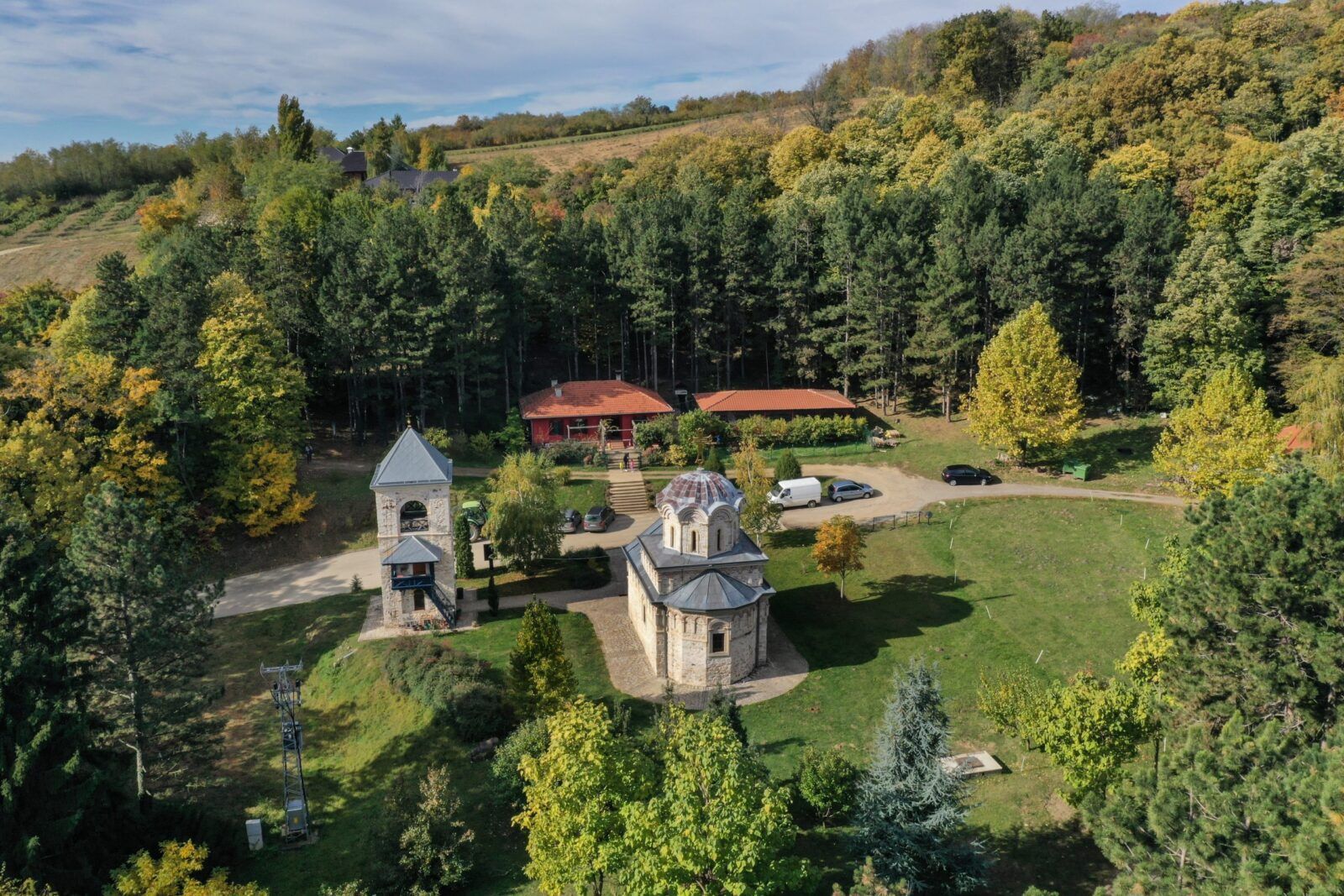
The local church was built as a smaller, bright, one-nave building, with a five-sided altar apse, seen from the outside, and a nine-sided dome, resting on pilasters. Its facade, as well as the base of the cube, was decorated with a series of blind arcades, which stretched between the cordon and the roof cornice. Next to the temple there was also a dormitory made of stone, while the bell tower was never built. Until the Second World War, the bells were hung on a wooden structure in the churchyard.
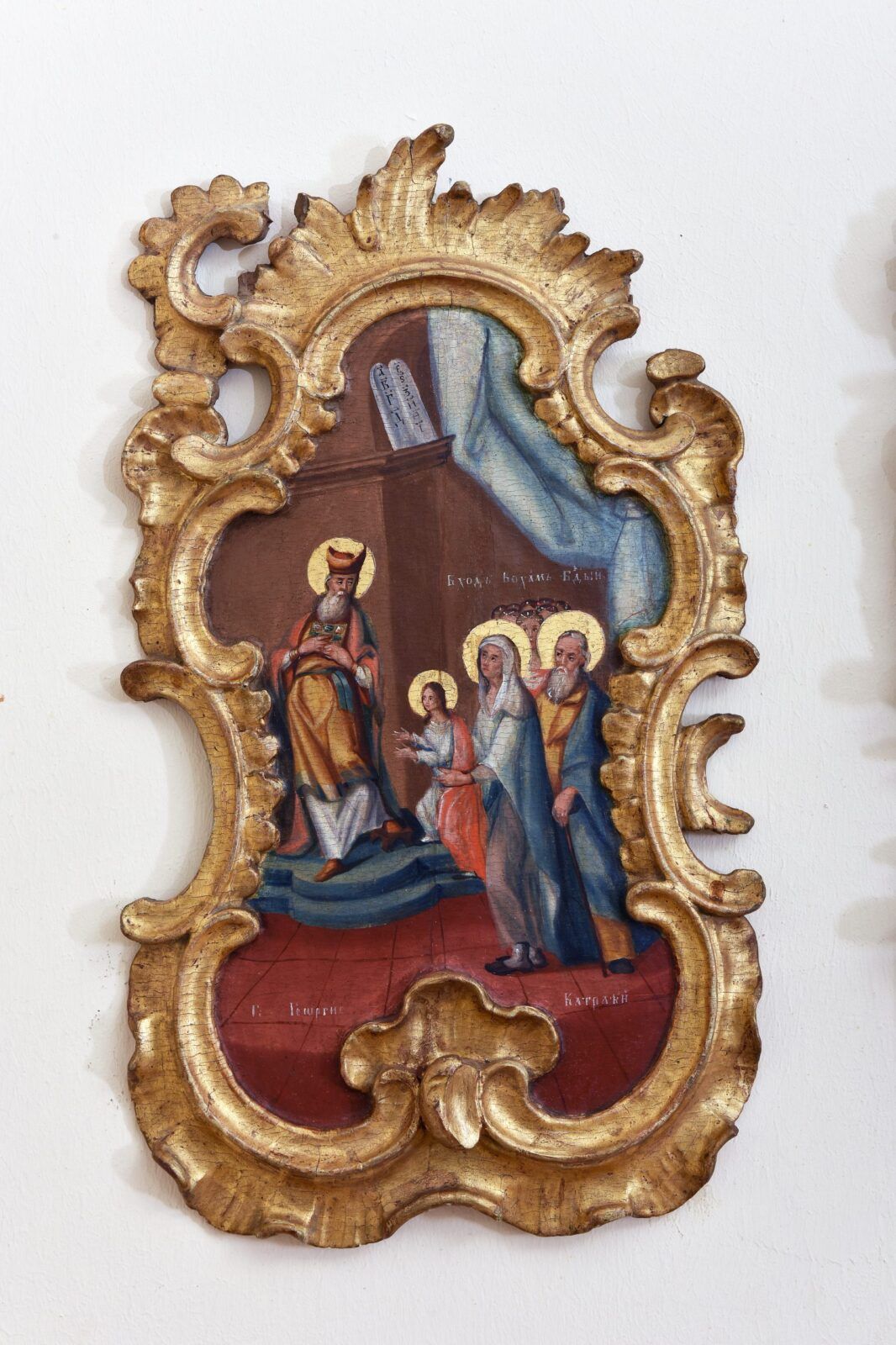
One of the most “stylistically pure” iconostases of Fruška Gora was painted there, through ktetorship of Georgije Katraći, from 1793. Some authors express the opinion that it was almost completely executed by Janko Halkozović, but part of it was later changed and copied, presumably due to damage. The iconostasis partition itself was high, with rich and gilded baroque woodcarving. Recent researchers believe that it is the work of Tom Firtler, a painter from Osijek, while the paintings, created between 1793 and 1800, are attributed to the “Irig painter” Jefrem Isailović.
Treasury of the Monastery
Several valuable goldsmith works were kept in the treasury of Staro Hopovo, among them the “Gospel” from 1662, forged in the workshop of the goldsmith Nedeljko from Ćiprovec. Medaković also characterized the “Gospel” chained with gilded silver as worth mentioning, whose ktetors were the Wallachian boyar Papa and his wife Jelena, in 1663.
Sufferings and renewals
During the Second World War, the church of Staro Hopovo was seriously damaged and its dormitory burned and demolished. Only twenty-six works of art were saved from the Baroque-Rococo iconostasis, which were restored and then stored in the Treasury of the Museum of the Serbian Orthodox Church in Sremski Karlovci. The materials from the half-destroyed building were used by agricultural collectives from the surrounding villages to build private houses and buildings on their farms. In 1949, the agricultural collective from Irig turned the monastery into a cattle pen, while its careless shepherds lived in the remains of the church of Saint Panteleimon.
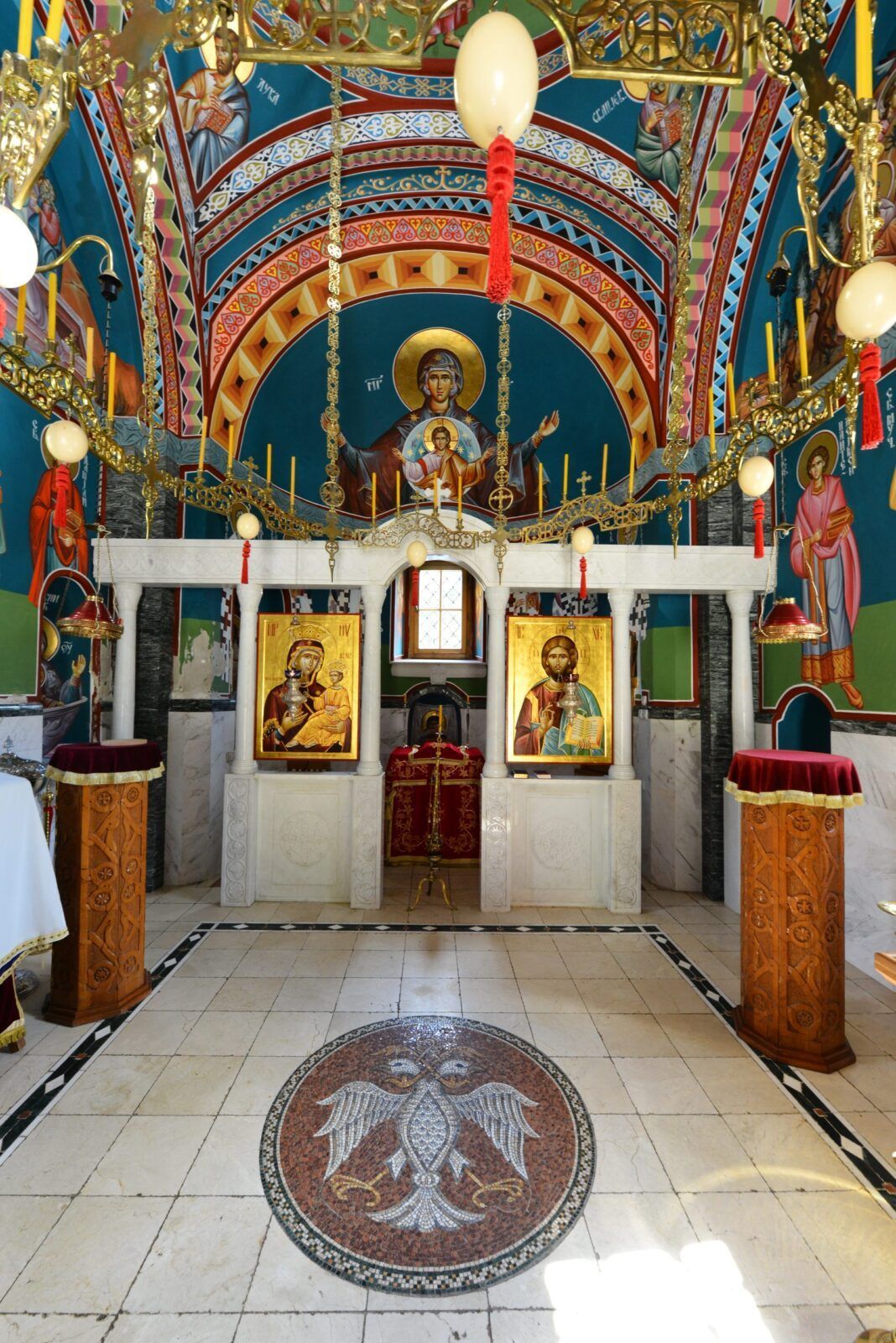
The renovation of Staro Hopovo began in 1957, when the sacral building was finally covered with a roof tiles. However, in the seventies of the 20th century, the competent state institution removed the frieze with ornaments from the temple, in order to decorate some secular public building, which endangered the roof, which then collapsed, taking part of the wall with it. The final renovation of the monastery, with the blessing of the Bishop of Srem, Mr. Vasilije, was initiated at the beginning of 2001 by Milan Čonkić from Petrovaradin, together with his family. Under the supervision of the Institute for the Protection of Cultural Monuments from Sremska Mitrovica, he bore the costs and carried out work on clearing the terrain, rebuilding the church and bell tower. The Church of Saint Panteleimon was renovated from 2001 to 2006, including plastering, repair of damage to the walls, vaults and dome, installation of completely new woodwork, cross on the roof and Holy Table, as well as the introduction of electrical installations and central heating. Due to his selfless founding, at the proposal of the competent archbishop, the Holy Synod of Bishops of the Serbian Orthodox Church awarded Milan Čonkić with the Order of Saint Sava.
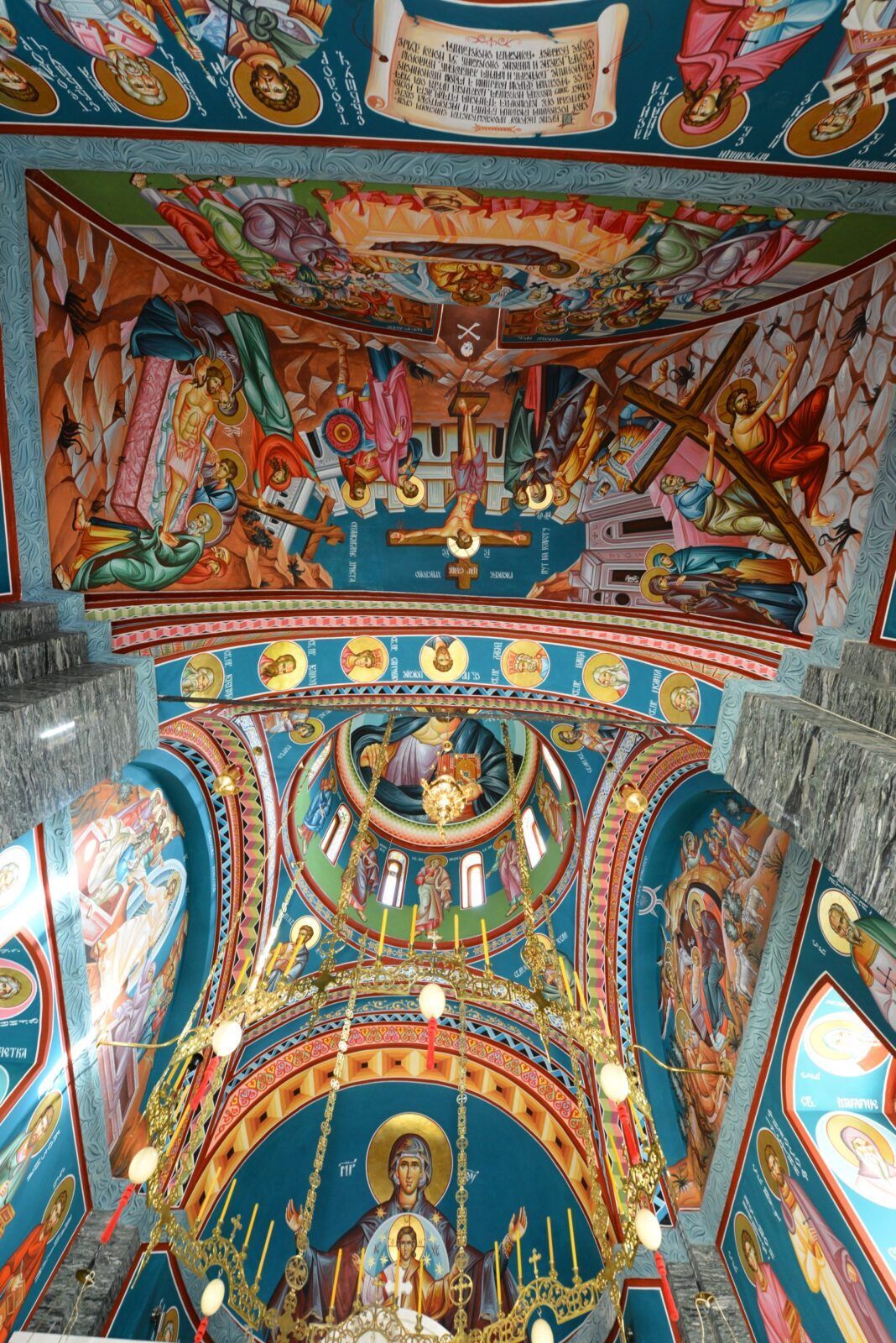
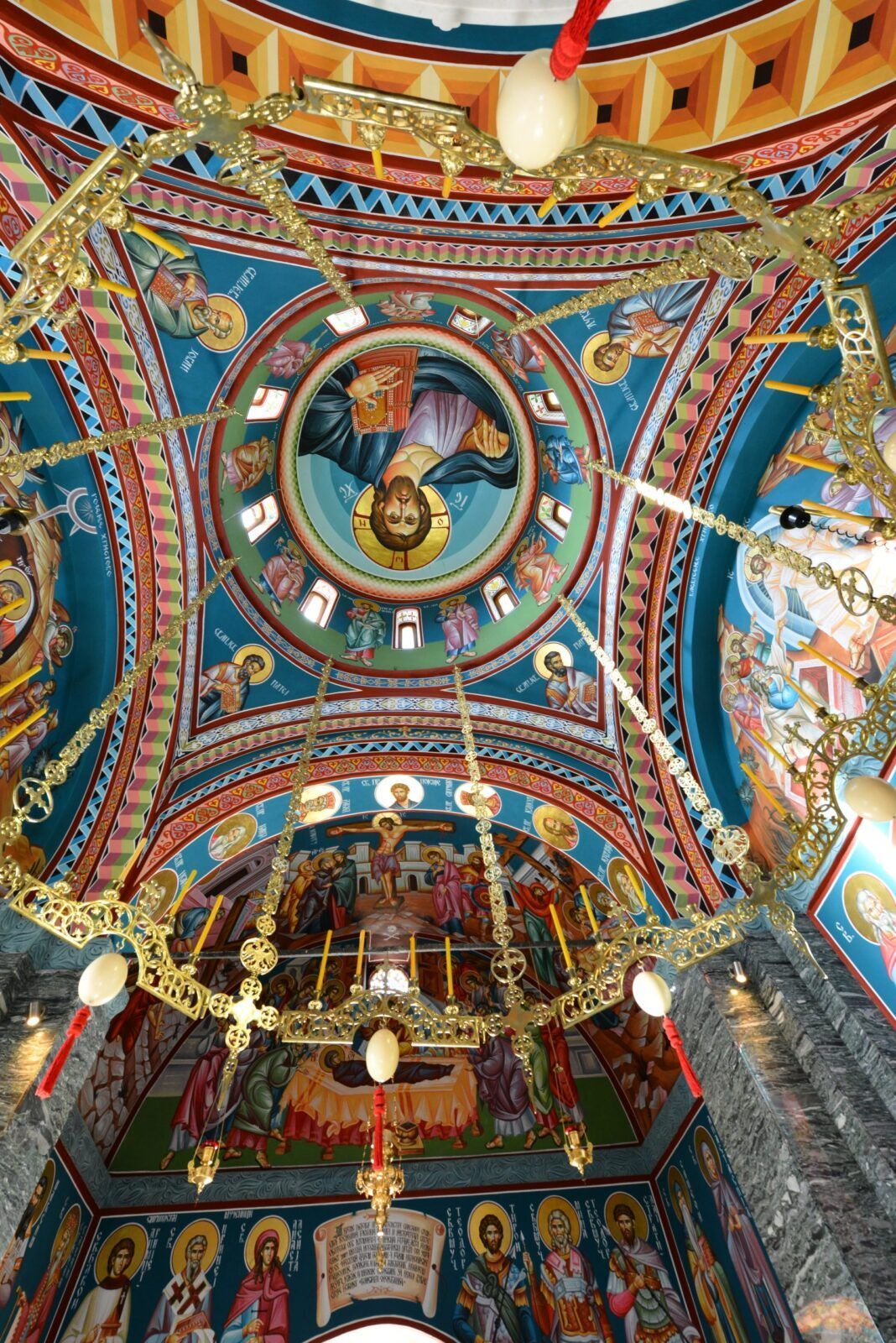
The new paintings were executed by Borislav and Marija Živković from Kikinda, at the expense of Stojko Draganić from Novi Sad. The iconostasis partition was made in China and was painted by the nuns from the Grgeteg Monastery as their contribution to the resurrected family. During the these interventions, Staro Hopovo was under the management of Grgeteg’s superior, Archimandrite Dositej (Miljkov), whose efforts led to the construction of the present-day dormitory in 2005, consisting of four cells, a kitchen and a refectory. Refectory furniture is a contribution of Mirko, Olivera and Milena Mikolaci from Irig.
The solid bell tower was built from 2008 to 2011. Staro Hopovo received its administration in 2006, after the Bishop of Srem, Mr. Vasilije, entrusted Hieromonk Atanasije (Gatalo) with the duty of hegumen, who was soon joined by Hieromonk Justin (Jeremić) from Velika Remeta. The first Holy Liturgy after the Second World War was celebrated here on Feast Day of Saint John the Baptist, the same year. The temple is also the resting place of its first ktetor, Archimandrite Zaharije (Milivojević), who died in 1757.